


I’m new to Japanese green tea, so I did a taste test at home of 5 teas from TeaSource. I brewed 3 grams of each at 175 degrees for 3 minutes. 1. Cascading Hills Sencha - More yellow than green at 175 degrees. Crisp, clean and flavorful. Tasting notes say “mountain aroma” and that is accurate. Not broth-y or saline, more mineral in taste. This is one of my two favorites in the group, but it’s quite pricey. Totally different flavor from the other four. 2. Clearwater Sencha - Definitely more green than yellow at 175 degrees. The most green of the group. Rich, broth-y flavor, but not oily or buttery. More saline. Of the “broth-y” teas in this group (#2-5), this is my favorite. It is tied with the Cascading Hills for my favorite, but a totally different flavor. Significantly cheaper than the Cascading Hills, but still on the expensive side. 3. Dancing Crane Karigane - Definite light green tones at 175 degrees, but not as green as the Clearwater Sencha. Very good, rich flavor. Definite “broth” flavor, a touch of grass. Buttery and rich. Much more depth than the next two, but not nearly as much flavor as the Clearwater Sencha. Still, it has to be said that this is the best bargain in the group. You can get 4 ounces of the Dancing Crane for almost the same price as 2 ounces of the Clearwater Sencha. Plus, the leaves look beautiful, with a two-tone color scheme (presumably due to the inclusion of stalk material). Definitely the most attractive leaves of the group. 4. Aurora Asanoka - More yellow than green at 175 degrees. Light buttery taste. Light yet still slightly oily (in a good way — that isn’t a criticism). Not particularly grassy, but slightly brothy. This is the most expensive tea of the group (even more than the Cascading Hills), yet it barely has more flavor than the Scenic Mountain Sencha. It doesn’t taste bad, but at this price I see nothing to recommend it. 5. Scenic Mountain Sencha - More yellow than green at 175 degrees. Very light flavor. Not broth-y, not vegetal, not mineral. This is the cheapest tea in this group, but I still wouldn’t recommend it because the flavor is so light. I think you still get better value for money with the Dancing Crane. Overall, #1 is a totally different flavor from #2-5. Those are all similar in flavor, with #2 the strongest, going down in strength and depth of flavor to #5. I highly recommend #1 and #2 if money is no object. #3 is the Best Buy by far, and if I weren’t tasting these back to back, you could probably serve me the #3 (Dancing Crane), tell me it was #2 (Clearwater), and I’d believe you. They aren’t massively different when tasted on their own.
products.product.pickup_availability.unavailable
The briny character of the liquor at the beginning quickly softens in the comfortable quality of sugar snap peas. The subtle, bitter citrus in the aftertaste is just right, but the unusually heavy presence from start to finish really shines.
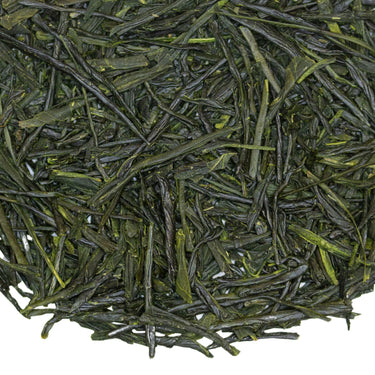
A 2026 first flush tea from our friends at the Otsuka Green Tea Co. It’s a lightly-steamed “asamushi” sencha made from the Saemidori cultivar growing in the Miyazaki prefecture of Japan. The plants were shaded to limit sun exposure ten days prior to harvest. These shaded teas are called “kabusecha” and bring desirable changes to the leaf before picking. The Saemidori cultivar was officially recognized in 1991 as a hybrid of the Asatsuyu and Yabukita cultivars.
Ingredients: green tea
Steeping Instructions
4 grams | 10-12 oz water | 175°F | Steep 3 min.
Kyusu Teapot Instructions
1st Steep - 10 grams | 8 oz water | 175°F | Steep 40 seconds
2nd Steep - 10 grams | 8 oz water | 175°F | Steep 10 seconds
Number of Cups
2 oz makes 19 cups, 4 oz makes 38 cups
Ingredients
Steeping Instructions
Western Steeping Method
Steep 4 grams of tea in 10–12 oz of 175°F (79°C) water for 3 minutes.
Traditional Steeping Method
Steep 10 grams of tea in an 8 oz kyūsu with 175°F (79°C) water for the following times.
1st steep: 40 seconds
2nd steep: 10 seconds
Additional steeps as the leaves allow.
These recommendations are just a starting point—experiment and discover what you enjoy most.
Approximate Cups of Tea per Package
This estimate is based on the recommended steeping instructions for this tea. Actual yield will vary depending on your steeping method and personal preference.